Somebody Has to Hold the Thread: The Unpaid Counseling Work Happening in Your Forum Right Now
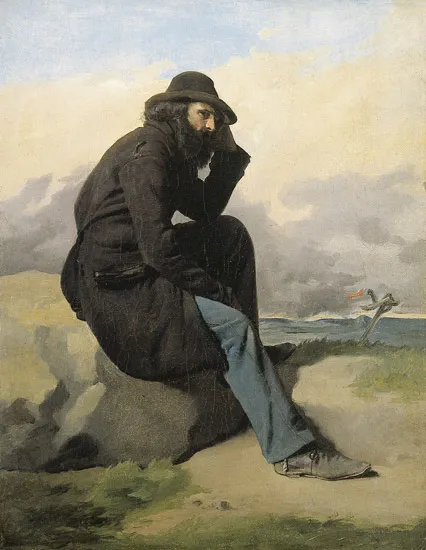
Photo: Antonio Ciseri, Public domain, via Wikimedia Commons
At 2:14 on a Tuesday morning, a post appears in a mid-sized hobby forum's off-topic section. It's from a member of nine years. It doesn't mention the hobby. It says things are pretty bad right now, and thanks for the years, and that's about it.
The first person to see it isn't a crisis counselor. It's a moderator — probably asleep, probably woken by a push notification from three worried members tagging the mod team. What happens next, no moderator handbook covers.
Spend enough time talking to forum moderators and you'll hear versions of this story over and over. The member who announced a divorce mid-thread and needed someone to just... stay in the thread with her. The teenager whose posts got darker over a month until a mod finally sent a private message. The two longtime members whose personal feud spilled into every corner of the board and had to be untangled like headphone cords, at 11 p.m., by a volunteer who also had a shift at their actual job the next morning.
The Job Description Nobody Wrote
Here's what forum moderation ads usually say: enforce the rules, remove spam, settle disputes.
Here's what the job actually includes, according to the moderators themselves: de-escalating personal conflicts, recognizing the difference between a bad day and a genuine crisis, knowing which members are grieving, and occasionally serving as the last human checkpoint between a struggling person and a very long night.
Most moderators stumble into this role with zero training. They were good at keeping the peace in a Star Wars subforum, so they got a title, and suddenly members started treating them like a combination of hall monitor, bartender, and emergency contact. And because moderators are, by and large, people who care, they answer. They answer at night. They answer when it's above their pay grade — which is easy to say, because the pay grade is zero.
The psychological research on informal caregiving is blunt about what this does to people: sustained emotional labor without support produces burnout that looks exactly like the moderator attrition every large forum eventually experiences. The mod who 'just stepped down suddenly' often didn't step down from deleting spam. They stepped down from being the community's unofficial therapist for two years without anyone acknowledging it.
Where Should the Line Actually Sit?
Let's be clear about the boundary, because it matters: moderators are not mental health professionals, and communities should stop pretending the role comes with clinical obligations.
But 'not a therapist' can't become 'not my problem.' The line, as experienced mod teams describe it, looks something like this:
A moderator's job is to notice, respond humanly, and connect — not to treat. Notice the post. Respond like a person, not a policy citation. Connect the member with real resources when the situation calls for it. What a moderator should never do is become the sole support system for a member in crisis, or absorb a responsibility that belongs to professionals.
The communities that handle this well have made three moves. First, they've written it down: a short, plain-language protocol for welfare concerns, so the 2 a.m. moderator isn't improvising. Second, they've posted crisis resources — a pinned thread, a sidebar link, a keyword-triggered auto-response — so help doesn't depend on which volunteer happens to be online. Third, and most importantly, they've normalized tagging out. Any mod can hand off a heavy situation to another mod, no explanation required, and nobody questions it.
What Communities Owe the People Holding the Thread
If you run a forum, here's the uncomfortable audit: your moderators are already performing emotional labor. The only question is whether they're doing it with support or in the dark.
Support doesn't have to mean a budget. It means acknowledging the work in public, not just the rule-enforcement work. It means never making one person the only mod available for off-topic or support-adjacent spaces. It means checking in on your mods the way they check in on members — because the people most likely to notice a struggling member are also, statistically, the people most likely to quietly struggle themselves.
And it means saying the true thing out loud: that a forum is a community of people, not a content pipeline, and that some of what holds it together isn't moderation at all. It's care. Unpaid, untracked, invisible care, performed by people who never asked to be anyone's lifeline but couldn't stand to look away.
Somebody has to hold the thread. The least a community can do is make sure they're not holding it alone.